
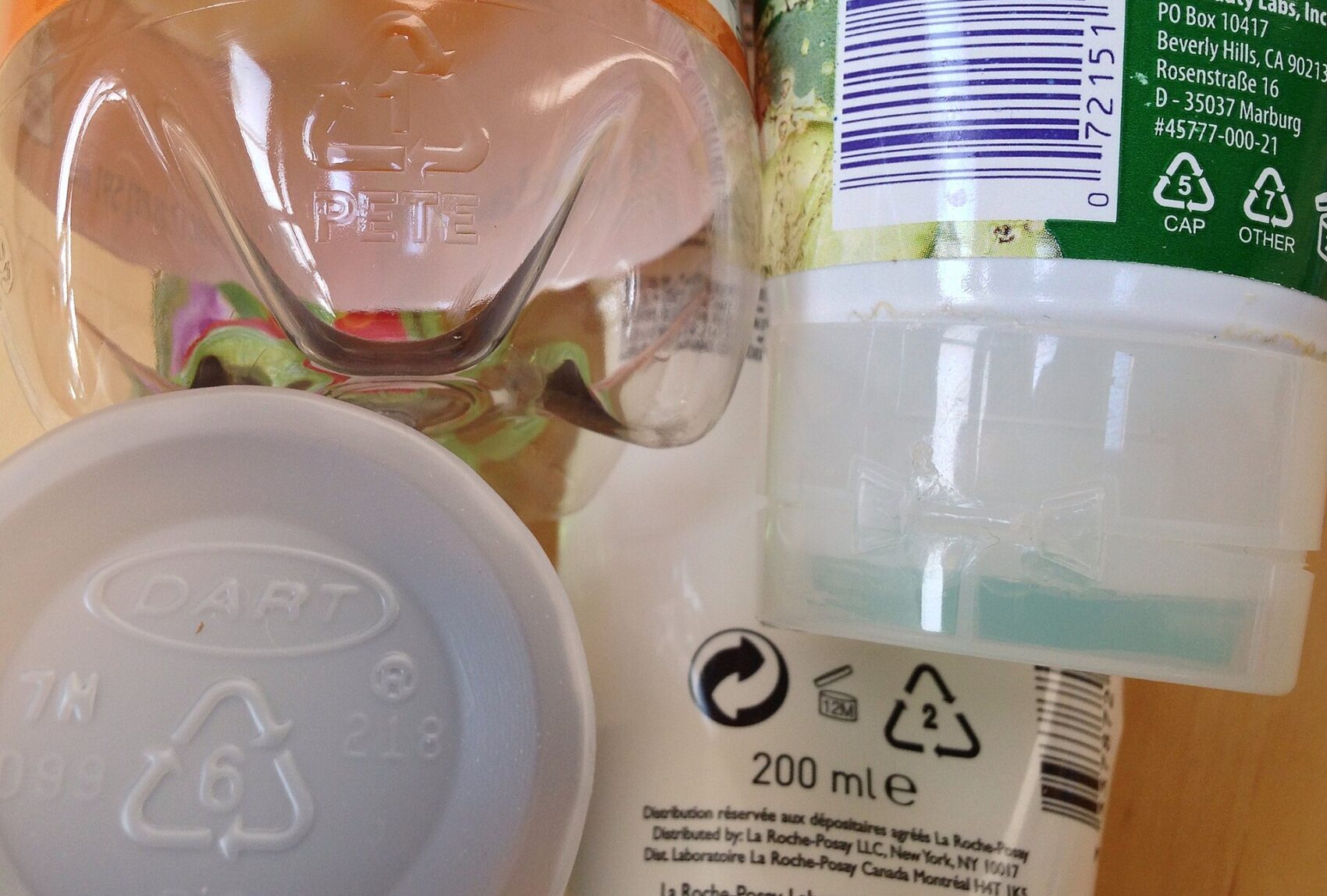
As Extended Producer Responsibility (EPR) laws are enacted by more governments and municipalities, manufacturers and packaging companies face new levels of accountability for what happens to their packaging after it serves its main purpose. In this environment, even small on-pack details, like resin identification codes (RICs), carry increased regulatory, financial, and legal implications.
In this post we look at how RICs function, how people perceive them, and how they are affected by EPR requirements.
What Are Resin Identification Codes?
Resin Identification Codes identify the type of plastic resin used in a product. The numbered system (1–7) helps recycling facilities identify, separate, and sort materials during processing.
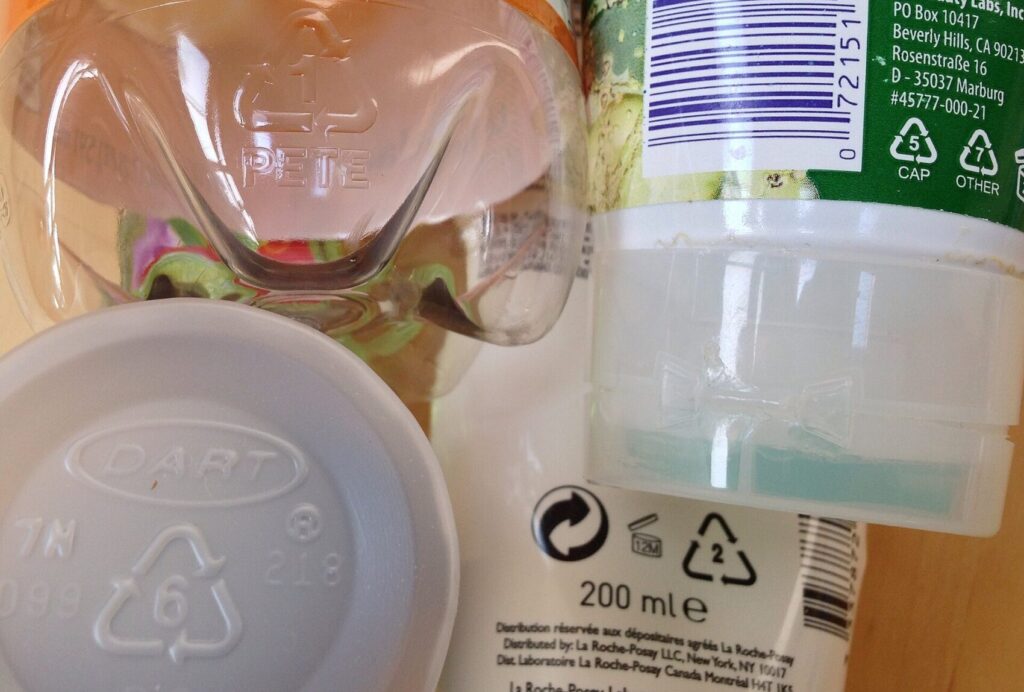
Common resin codes include:
- 1: Polyethylene Terephthalate (PET) – used for single-serve water/soda bottles, peanut butter jars, cooking oil bottles, and polyester clothing (fleece, fabric)
- 2: High-Density Polyethylene (HDPE) – used in a wide variety of packaging (food containers and other bottles), industrial (piping systems, chemical containers, and automotive fuel tanks), consumer goods, and construction applications
- 3: Polyvinyl Chloride (PVC) – used for construction and building (pipes, siding, window frames, flooring), healthcare (blood bags, IV tubing), and consumer goods (inflatables, faux leather, clothing, shower curtains)
- 4: Low-Density Polyethylene (LDPE) – commonly used for plastic bags, cling film, squeeze bottles, bubble wrap, and agricultural coverings
- 5: Polypropylene (PP) – used in applications that require high tensile strength, durability, and resistance to fatigue, such as food packaging, automotive parts, medical devices, and consumer goods
- 6: Polystyrene (PS) – used in foodservice packaging (yogurt cups, egg cartons), laboratory equipment, toys, appliance housings, and insulating foams
- 7: Other or mixed resins – a catch-all category for any plastic resin that does not fit into categories 1–6, including mixed materials, polycarbonates (PC), and bio-based plastics like polylactic acid (PLA); common items include 3–5 gallon water jugs, sunglasses, safety goggles, CDs, food containers, nylon, and some food wrappers
This material identification is essential for EPR systems. Accurate resin information makes several tasks possible for EPR programs, including data collection, reporting, and correct assessment of fees.
The Recycling Symbol
One thing resin identification codes do not do is guarantee that a package is recyclable or accepted in curbside programs. And this is where some confusion arises.
Resin identification codes are often displayed within the familiar triangular recycling arrow symbol. This makes them easier to recognize, but has created a new challenge: When consumers see that triangular icon, they typically think it means the material is capable of being recycled, though that’s not always the case.
Under EPR frameworks, this consumer confusion is more than a messaging issue. Misinterpretation can:
- Undermine recycling system performance
- Increase contamination rates
- Trigger scrutiny under labeling and truth-in-advertising rules tied to EPR laws
As producers become financially responsible for ensuring their packaging is recycled, recovered, or otherwise accounted for, clarity about packaging labels matters more than ever.
Why Resin Identification Codes Are Under Scrutiny Now
In several states, ongoing lawsuits and regulatory actions are questioning whether certain packaging symbols, including resin codes paired with recycling imagery, mislead consumers.
As producers fund recycling systems, states are taking a harder look at:
- Claims that overstate recyclability
- Symbols that imply recyclability without system support
- Packaging designs that shift costs onto the recycling system without delivering value
In an EPR context, misleading labels don’t just confuse consumers; they increase system costs that producers are now required to cover.
Improving Accuracy
One of the core goals of EPR legislation is to align packaging design with real-world recycling outcomes, not theoretical recyclability.
EPR programs often base producer fees and performance targets on factors such as:
- Whether the material is accepted by recycling systems
- Sortability at material recovery facilities (MRFs)
- Availability of end markets
- Overall recyclability at scale
A package can carry a resin code and still be non-recyclable in most communities. It might be penalized with higher EPR fees or flagged as problematic under labeling guidance.
How2Recycle, a project of the Sustainable Packaging Coalition, introduced the How2Recycle label that attempts to clarify these factors directly on packaging.
Beyond recyclability and resins, these labels explain a few things:
- Packaging Item: Describes which component the label is referencing. The How2Recycle label specifies disposal instructions for each component. (e.g., “Bottle”, “Bag”, “Lid”, “Tray”).
- Packaging Material: Identifies the type of material the packaging component is made from.
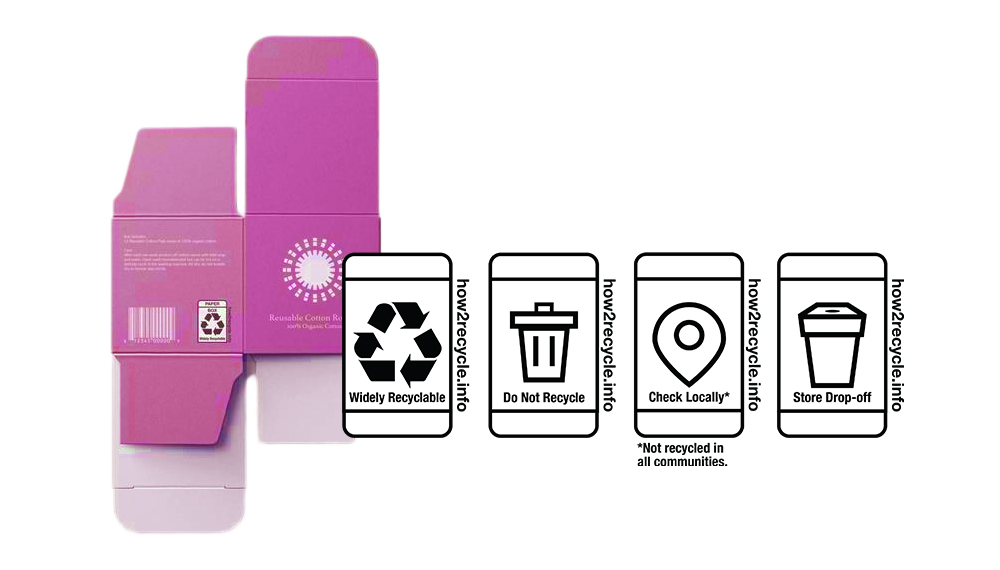
- Recyclability Designation:
- Widely Recyclable
- Check Locally
- Store Drop-off
- Not Yet Recyclable
- Special Instructions: Provides additional instructions for effective recycling such as “Rinse & Insert Lid,” “Empty & Replace Cap,” or “Keep Plastic Bag Clean & Dry”.
- Geographic Qualifier: Indicates whether the instructions apply to the US, Canada, or both.
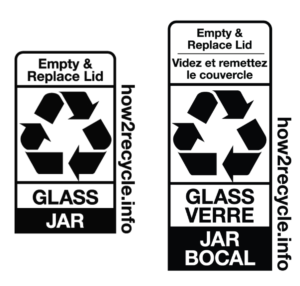
The latest version, How2Recycle Pro Labels, has implemented icons for the recyclability designation, so that at a glance, consumers know how to recycle or dispose of the package. Hopefully these new icons will become as common and understood as the recycling arrows symbol.
What EPR Means for Packaging and Labeling Decisions
For manufacturers and packaging companies, EPR changes the calculus around resin identification codes. Before EPR, resin identification codes were largely an operational detail. Now and in communities where EPR is taking hold, these codes sit at the intersection of design, labeling, compliance, cost, and legal risk.
EPR laws increasingly reference accurate, non-misleading labeling. Clear separation between material identification and recycling instructions can reduce risk. A resin code is only helpful if the package can actually be sorted and processed at scale.
In addition, EPR reporting depends on precise material data. Incorrect or unclear resin identification can create compliance challenges and financial exposure.
Producers should expect evolving standards. As EPR programs mature, labeling requirements and approved symbols may continue to change.
Featured image credit: By Z22 – Own work, CC BY-SA 3.0, https://commons.wikimedia.org/w/index.php?curid=33928886
